
6 Arc Place · Staten Island
You shouldn’t have to raise your family alone.
UMMA Center gives young people somewhere to build friendships and learn from adults worth copying. Parents stay part of it from the first visit on.
Visit before you join.
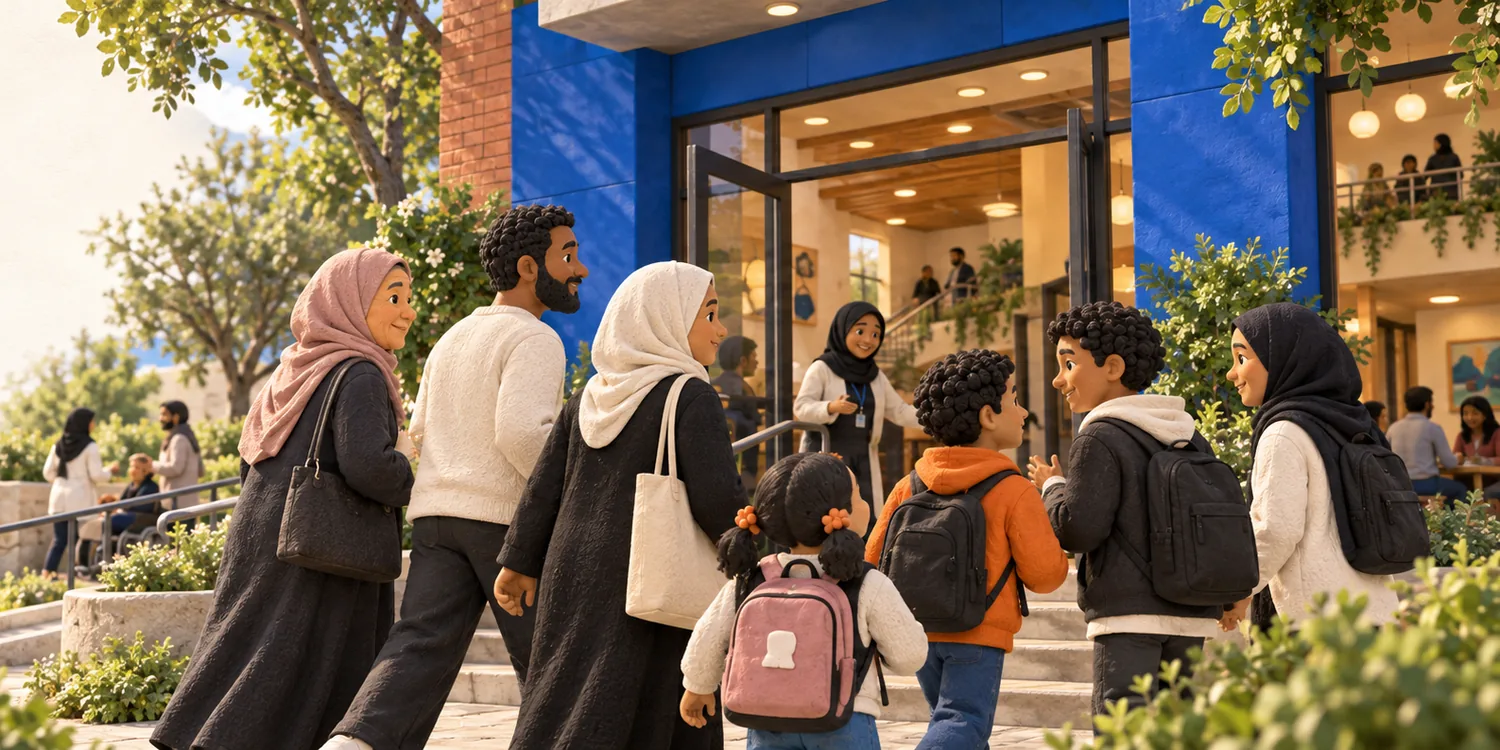
Concept illustration. See the actual space and plan a visit.
Find what fits
Start with your child.
Ages, cost and access come from each program's own rules, so this page cannot quote you something the sign-up page disagrees with.
We run programs for ages 4 to 29.
3 programs to look at
Homebase
Middle School · High School · Ages 11–18
You homeschool. We provide the Homebase. Mon–Thu, 8am–2pm.
- Next
- Today · 8:00 AM – 2:00 PM
- Cost
- By applicationFree UMMA Center account required
See what happens at HomebaseStudios
Growing Minds · Middle School · High School · Young Adults · Ages 7–29
Podcast, video and content studios. Tell your story. Run your show. Learn how media works.
- Next
- Wednesday · 5:00 – 7:00 PM
- Cost
- FreeFree UMMA Center account required
See what happens at StudiosFriday Nights
Middle School · High School · Ages 11–17
The best night of the week to be young. Board games, food, real talk, mentors who get it.
- Next
- No upcoming date posted
- Cost
- FreeFree UMMA Center account required
See what happens at Friday Nights
How this works with you
You stay part of the process.
Programs get them through the door. Relationships bring them back. Belonging makes it home. None of it works if a parent is left outside.
Before
You decide with the facts in front of you.
- Every program shows who it is for, when it runs, and what it costs.
- Come and look around first. You do not have to join anything to visit.
During
You know where your child is and who to ask.
- Before leaving your child, confirm who is supervising, how attendance is recorded, and where pickup happens with the session leader.
- Programs run to the rules we publish, and you can always reach a person: hello@ummacenter.com.
After
You stay the one who decides what happens next.
- Most of what happens is ordinary and gets sorted out in the room. Anything serious follows the escalation process on our safety page, and your family is part of it.
- What your child does next is your call. Nothing signs you up for the next thing.

The village
A child grows up around more than one adult.
UMMA Center holds every stage of life at once, in one building. That is the idea: your child is known by adults who are not their parents and not their teachers, and who are still here in ten years.

Early Learners
Ages 4–6

Growing Minds
Ages 7–10

Middle School
Ages 11–13

High School
Ages 14–18

Young Adults
Ages 19–29

Lifelong Learners
Ages 30–59

Always Belong
Ages 60+
NEXGEN is the part of that village where the next generation grows. It is not a separate place, and it is not the whole of UMMA Center. See what NEXGEN runs.
Safeguarding
Safety is a practice, not a promise.
Nobody can promise a child will never be hurt. We can run the place to written rules, say what they are, and make it easy to tell us when something is wrong.
People
Who may work with young people, and what screening they clear first.
Read the policy on peopleSupervision
How many adults a session is staffed to, and why one-to-one time happens in the open.
Read the policy on supervisionArrival and pickup
How your child is checked in, who may collect them, and what happens if you are late.
Read the policy on arrival and pickupTalking to you
What gets handled in the room, and what always comes to a parent.
Read the policy on talking to youRaising a concern
How to tell us something is wrong. Your child can do it without going through you.
Read the policy on raising a concernPhotos and privacy
What we ask before using a photograph of your child, and how you take it back.
Read the policy on photos and privacy
Something worrying you? Email hello@ummacenter.com. You do not need to be certain, and you do not need proof.

The first visit
Four steps, and none of them commit you to anything.
Pick a time
Pick something on the calendar, or ask for a walk-through on a quieter day.
Tell us who is coming
Names and how many, so the room and the food are right.
Find your session leader
Check the session details before you come. When you arrive, find the person leading your session and ask where to go.
Watch how your child is with it
Meet the staff, walk the space, ask what this page did not answer. Sitting at the edge all evening is a normal first night.
Before you come
- Getting in. Salon Arabic Book Club is free to attend and needs no account. Every other program says what it asks for on its own page.
- Let us know you are coming. Salon Arabic Book Club takes an RSVP so the food adds up. Turning up unannounced is still fine.
- Allergies and medication. Tell the session leader directly before the session starts. Confirm how the information is recorded and shared with the adults supervising your child.
- Pickup. Check the pickup rules before the first time, and tell us who may collect your child.
- Anything else. Access needs, whether you should stay, what to bring: email hello@ummacenter.com. We would rather answer than have you guess.
Money
Know the cost before you decide.
Four ways money works here, and only one is a monthly plan. Nobody should choose a membership before they have been in the building.
A free account
Community costs nothing and never expires. A household login for RSVPs and sign-ups. Some programs do not even ask for that.
Pay for what you use
Charged per session or per month, on each program page, whether or not you ever join a plan.
A family plan
One household, one price, for up to five people in your household. It lowers the price of what your family already does here. Monthly prices are not published yet.
Priced on its own
Homebase has its own tuition, assessed during the application rather than through a membership.
If the price does not work
A scholarship fund is built into the membership model. Email hello@ummacenter.com, or tell any staff member. "The price does not work for us" is a complete request. You do not need to show income to start.
Homebase tuition is assessed separately from membership, raise it during the application conversation.
How scholarships workCome and see the village for yourself.
Meet the people. Walk the space. Ask your questions. Bring your child and see how the place feels before you decide anything.
No membership needed to visit.Read the safety policy